Florida’s Hunting Opportunities
Florida is a peninsula located in the southeastern United States. The Gulf of Mexico borders the State to the west, Alabama to the northwest, Georgia to the north, and the Atlantic Ocean to the east.
Florida’s terrain is mostly flat, with some rolling hills. The highest point in Peninsular Florida is Sugarloaf Mountain, only 312 feet (95 m) above sea level. The climate of Florida is humid and subtropical. Florida is called the Sunshine State because some areas receive sunshine for three-fourths of the year.
The State is home to a diverse array of plant and animal life. There are over 1,700 species of animals and nearly 4,000 species of plants. The Florida panther is the state animal, and the bald cypress is the state tree.
The State’s plant life is diverse and includes longleaf pine, palmettos, and cypress trees. The fauna of Florida includes white-tailed deer, American alligators, Florida panthers, manatees, and several species of snakes.
Florida’s coral reefs are some of the most beautiful and diverse in the world. They are home to a wide variety of marine life, from colorful fish to sea turtles.
There are 34 million acres of private and public property, including 6.67 million acres of wildlife management areas, making it one of the country’s largest publicly available hunting systems in the US.
WMAs in Florida are designed for conservation and enjoyment. Hunting is an integral part of the WMA system, and it is available at most locations. The State offers a variety of games, including deer, turkey, quail, and hogs. In addition, there are shooting ranges and camping opportunities in various locations. Quota hunts and special-opportunity hunts are among the options available to those wishing to hunt FWC-managed areas. These restricted entry hunts, given out through random drawing, are meant to offer various hunting experiences while also accomplishing conservation goals. There are also public hunting grounds where a quota permit is not required to hunt in part or all of an area’s season.
Florida Big Game Hunting
Before buying a hunting license, persons born on or after June 1, 1975, must complete a hunter safety course to hunt without supervision. Children under the age of 16 may hunt with adult supervision if they have completed a hunter safety course. If you are 16 or older without a hunter safety course, you can get a deferral from the hunter safety certification requirement when buying your hunting license. It also allows them to buy a license and pursue a game under the guidance of an adult aged 21 years or older.
Hunter orange requirement – It is illegal to hunt deer or accompany someone else hunting deer on public land unless each person wears at least 500 square inches of daylight fluorescent-orange material as an outer garment. Outer attire must be worn above the waistline and may include a head covering. This regulation does not apply during archery-only seasons or on private property.
There are many different types of big game animals in Florida, and each offers its own unique challenges. So, whether you are after a trophy whitetail deer or an elusive wild hog, Florida has something for every hunter.
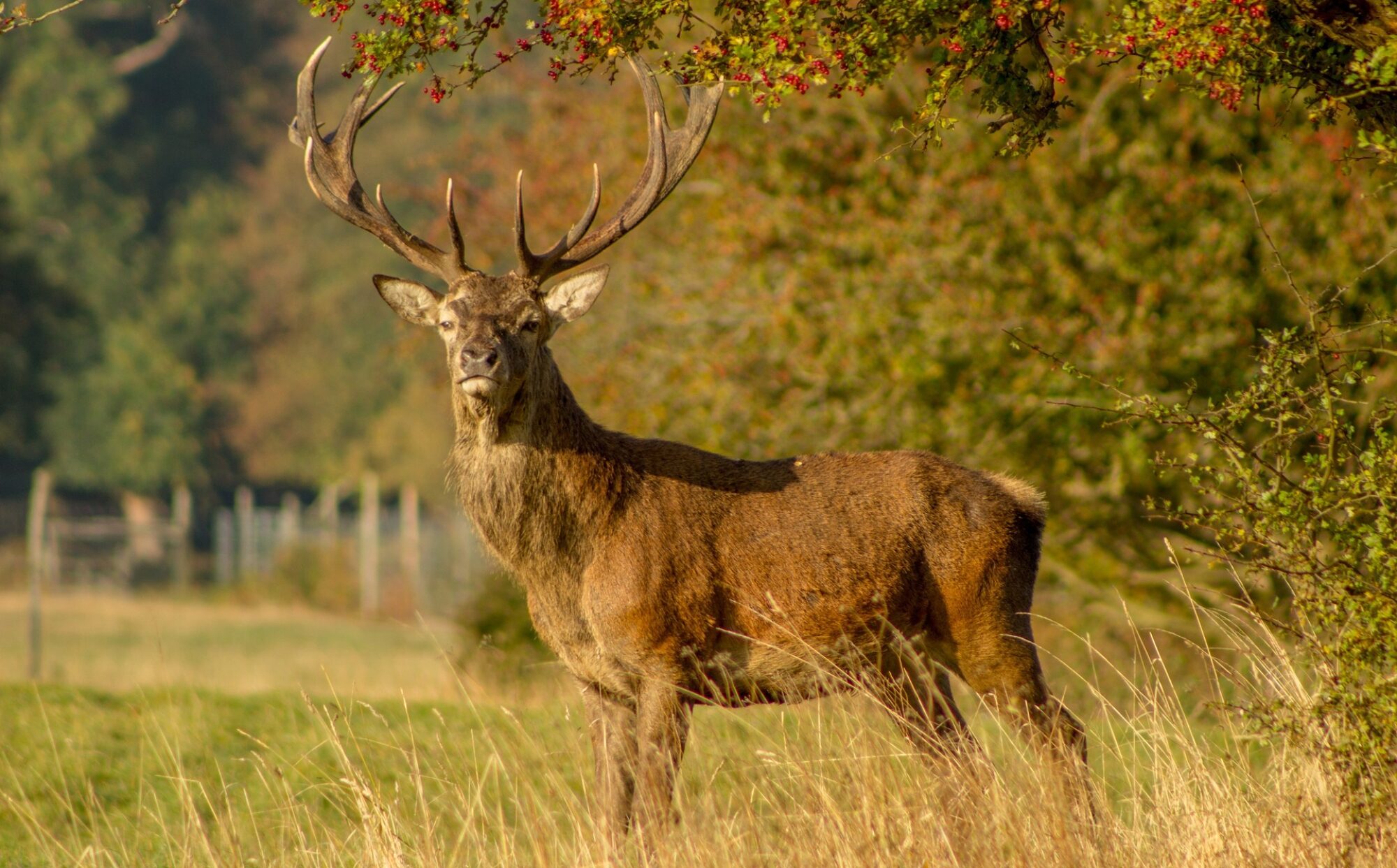
- One of the most popular big game animals to hunt in Florida is whitetail deer. White-tailed deer can be found throughout Florida, from the panhandle to the keys. They prefer habitats with young, low-growing vegetation and edge, where the intersection of two different habitats allows deer to feed and avoid predators easily. These animals offer a challenging hunt for even the most experienced hunters. If you are looking to bag a trophy whitetail, Florida is the place to be.
- Another popular big game animal to hunt in Florida is wild hogs. These animals are found in many different parts of the State. They are a widespread species found in all 67 Florida counties. Hogs are seen in a wide range of settings, including oak-cabbage palm hammocks, freshwater marshes and sloughs, and pine flatwoods. There is no size or bag restriction; both males and females can be taken.
- Bears favor habitats with Flatwoods, swamps, scrub oak ridges, and bay heads; these areas have trees and shrubs that produce nuts and fruits. There are 19 different species of oaks indigenous to Florida, each growing a unique type of acorn that is a seasonal favorite of bears. For bears, regulated hunting is allowed in four of the seven bear management units.
Big Game Hunting Weapons
- Rifles, shotguns, pistols, air guns, longbows, compound bows, recurve bows, and crossbows.
- Hand-held releases are allowed.
- Broadheads with at least two sharp edges and at least 7/8-inch wide are required to take deer with arrows or bolts.
- Only pneumatic (PCP) air guns that fire single bullets or bolts/arrows of at least .30 caliber are allowed to hunt deer.
- PCP are commercially manufactured air guns fed from an external high-compression source, such as an air compressor, external hand pump, or air tank, and are intended to shoot a bolt or arrow for hunting.
- Single-bullet muzzleloaders must be at least .30 caliber. Muzzleloading weapons firing two or more balls must be 20 gauge or larger.
- Muzzleloading guns that can be used for muzzleloading gun seasons allow you to load the barrel with gun powder at the breech.
Small Game and Hunting Weapons
The majority of the WMAs offer a small-game hunting season where quota permits are unnecessary. However, you need a hunting license and a management area permit to go out and hunt.
Small Game
- Gray Squirrel and Rabbit hunting are usually easier than pursuing other species because all you need is a place to go, a gun, some basic gear, and planning.
- Eastern gray squirrels occur in woodland and urban areas, especially near oaks and hickories, and are active during the day, often feeding on the ground. However, they spend much of their lives in trees.
- The cottontail rabbit prefers heavy brush, strips of forest, weed and briar patches, abandoned fields, and fringe areas of cultivated fields. Daily bag limits and possession limit for rabbits is 12 and 24, respectively.
Small Game Hunting weapons
Rifles, shotguns, pistols, muzzleloaders, air guns, crossbows, and bows are all permitted. The gray squirrel may be taken with archery equipment during the archery season and with a crossbow and muzzleloading gun during its respective seasons.
- Furbearers
- Bobcats are widely distributed throughout Florida in deep forests, swamps, and hammock land. Thick patches of saw palmetto and dense shrub thickets are essential as the den and resting sites.
- Raccoons are found throughout the State, commonly in urban areas. Their habitat is where trees provide an opening and nearby reliable water source.
- Opossums’ habitats in woodlands and proximity to water.
- Coyotes are native to North America and occur throughout the eastern United States. Coyotes are expanded to all 67 counties in Florida.
- In rivers, swamps, or lakes, the beaver thrives throughout the Florida panhandle and upper peninsula.
- Striped skunks are found throughout Florida, except in the Keys, and prefer areas that have large dead trees. The range of the eastern spotted skunk expands throughout Florida, excluding the Keys and, possibly, the extreme Northeast portion of the State.
- Current Nutria populations remain concentrated in Jacksonville, with some sightings in Pensacola, Tampa, and West Palm Beach.
Furbearers Hunting Weapons
- Furbearers may be hunted with a rifle, shotgun, pistol, muzzleloader, air gun, crossbow, or bow all year.
- Single-shot firearms or double-barreled shotguns in.22 caliber rimfire (other than .22 magnums) and single-shot, double-fulfillment .410-gauge shotguns are permitted.
- Fur-bearing animals can be hunted with guns (including air guns) and recorded game calls.
- Hunting raccoons or opossums at night is allowed. However, hunting by using or displaying lights from automobiles, ships, or animals in motion is unlawful.
- Resident Game Birds
a) Turkey(gobblers and bearded turkeys only).
- The Florida wild turkey is found only in peninsular Florida.
- Their habitat is in woodland throughout Florida. They prefer open forests.
- Fall and spring turkey seasons – Shotguns, pistols, rifles, pre-charged pneumatic air guns, muzzleloaders, crossbows, or bows are allowed.
b) Quail
- Throughout Florida, the northern bobwhites can be found in suitable conditions. They rely on early successional habitat produced by frequent fire in fully grown upland pine forests. Other locations include fallow agricultural fields where ragweed dominates the landscape. The best habitat mix is a burned upland pine forest with a fallow field/opening.
- Rifles, shotguns, pistols, muzzleloaders, air guns, crossbows, and bows may be used. During archery, crossbow, and muzzleloading gun seasons, quail may also be taken as per the weapons that apply to those seasons.
- Archery season — Only bows are allowed.
- Crossbow season — Only crossbows and bows are allowed.
- Muzzleloading gun season — Only wheel lock, flintlock, percussion cap, and centerfire primer (including 209 primers) muzzleloaders can be used; crossbows and bows are also permitted. During the muzzleloading gun seasons, Muzzleloading guns that can be loaded at the breech with gun powder are legal.
- General gun season — Centerfire arms and shotguns and centerfire pistols and hunting weapons such as muzzleloaders, pre-charged pneumatic air guns, crossbows, and archery bows, are allowed.
Native Species
- Male White-tailed deer in Florida range in weight from 115 to 190 pounds, while those in North Florida can reach more than 190 pounds. The smaller females weigh 90 pounds, while the larger ones weigh more than 120 pounds. The males, or bucks, have antlers that grow and shed each year.
- The Florida black bear entire, black-furred is a subspecies of the American black bear and is the only one found in Florida.
- The grayish-brown cottontail rabbit has a distinctive white puffy tail. The rabbit is an herbivorous animal, and its diet consists of fresh plant material in the summer months.
- The eastern gray squirrel has a bushy-tailed, grayish-brown fur body feeding on bark, nuts, and acorns. The fox squirrel and the southern flying squirrel are the two species found in Florida.
- Bobcats are generally yellowish-brown with dark brown or black streaks. They have pointy ears with a short-bobbed tail.
- In Florida, their a striped skunk and the eastern spotted skunk. Eastern spotted skunks exist in two subspecies; the Appalachian spotted skunk and Florida spotted skunk. The eastern spotted skunk is considerably smaller, with an average body length excluding the tail of 11-12.5 inches, whereas The striped skunk’s average body length excluding the tail ranges from 13-18 inches.
- Raccoons are amongst the smartest of Florida’s wildlife, noted for their black mask and bushy ringed tail weighing 8-15 pounds. They consume a variety of fruits and plant products, as well as eggs, tiny animals, and even waste.
- Opossums have fur, which is grayish-white, elongated tails, and tiny ears. Opossums are excellent climbers.
- Coyotes are small, slender animals that weigh between 20 and 30 pounds and have pointed ears and a slim muzzle.
- Wild turkeys are strong fliers and can reach speeds of up to 55 mph. Wild Turkeys are large birds with long legs, broad, rounded tails, and a tiny head on a long, thin neck. The eastern wild turkey and the Florida wild turkey are two subspecies of wild turkey found in Florida. The male wild turkey is heavier and larger than the female. Its featherless head has pinkish-red skin. The female is thinner and duller, with a blue-gray head.
- The northern bobwhite quail is a small, rounded bird with a short tail and neck. They have speckled red-brown.
Public Lands
Most people visit WMAs to hunt, but many come for the opportunity to view and photograph wildlife. Birding is a popular activity on WMAs, as Florida is home to more than 500 species of birds. Many visitors enjoy paddling or hiking through these areas to experience them differently. Some people even choose to camp on WMAs, but there are usually strict regulations.
There are more than 160 WMAs in Florida, totaling nearly 6 million acres of land. That is a lot of ground to explore! Here are a few of the most popular WMAs in the state:
1,610 acres of primarily sandhill habitat are protected at the Fort White Wildlife and Environmental Area, four miles west of Fort White in Gilchrist County. Beavers, river otters, and even manatees may be observed in the adjacent Santa Fe River that courses along the eastern edge. Migratory and resident species include swallow-tailed kites, barred owl, and Bachman’s sparrow. In addition, gray squirrels, wild turkeys, and white-tailed deer hunting is prevalent in the area during their seasons. The parking lot on NE 2nd Way has a boat ramp near it that provides access to the Santa Fe River, sizeable bald cypress trees, and wildlife viewing opportunities on the river. A quota permit is required during archery, spring turkey, and youth turkey seasons.
The Andrew Wildlife Management Area is a 3501-acre property on the Suwannee River in Levy County, Florida. Quota permits are required for archery, muzzleloading guns, general guns, youth, youth turkey, and spring turkey hunting seasons. Hiking and fishing with a management area permit or daily-use fee are allowed during non-hunting hours. From upland forest to floodplain swamp, an interpretive boardwalk passes through various environments. The WMA provides a wide range of opportunities for anglers and hunters, including decent numbers of white-tailed deer, wild turkeys, and feral hogs. In addition, the Suwannee River may be fished from both boats and the shore.
The Okaloacoochee Slough Wildlife Management Area has 2,992 acres in Hendry County. White-tailed deer, feral hog, wild turkey, and small game attract hunters to Okaloacoochee Slough WMA. Wildlife viewing on this Great Florida Birding and Wildlife Trail site is popular all year round. Hikers, horseback riders, and bicyclists enjoy over 40 miles of unpaved roads. Camping is allowed on designated spots. Bobcats and other songbirds live in the pine hills here. The crested caracara and swallow-tailed kite are commonly observed soaring over flooded meadows.
The Three Lakes Wildlife Management Area, located approximately 70 miles (110 km) south of the Kissimmee-Disney World area of Central Florida, is the second-largest expanse of arid prairie in the United States. The WMA is a 54,611-acre area in Osceola County suitable for recreational activities such as hunting, fishing, and trekking. Deer, bobcat, wild turkey, and mottled duck are among the species that may be seen in the region. The bald eagle is also known to frequent the wildlife area all year.
Osohatchee Wildlife Management Area is a 30701-acre tract of land that includes 1000 acres of ancient floodplain swamp, 20 to 40 acres of old-growth mesic Flatwoods, and an unknown amount of old-growth hydric hammock. The WMA has endangered and rare flora and wading birds, songbirds, and migratory waterfowl. The bald eagle, hawks, turkey, and owl live here. White-tailed deer, bobcat, fox squirrels, and gray foxes can all be hunted here. Hiking, biking, and basic back-pack camping are among the recreational activities available. In addition, the WMA is popular for hunting, fishing, geocaching, and nature viewing.
The J.W. Corbett Wildlife Management Area is a 60,348-acre preserve in Florida. It is 25 miles northwest of West Palm Beach and east of Lake Okeechobee. It’s near the Ocean to Lake Trail and the Great Florida Birding & Wildlife Trail.
The oldest Wildlife Management Area in Florida, Fred C. Babcock/Cecil M. Webb WMA, protects 80,772 acres in Charlotte and Lee Counties, Florida. This WMA’s landscape-level of preserved habitat serves as a vital habitat for various animals and uncommon plants. For example, there have been rare sightings of Florida panthers in this region. Hunting is extremely popular with rising white-tailed deer and Northern bobwhite populations, and opportunities exist to hunt mourning dove and feral hog. A shooting range is conveniently located near the entrance, and it sees hundreds of people on the weekends. In addition, several miles of unpaved roads allow bicyclists and horseback riders to explore the region.
Apalachee Wildlife Management Area is a 7,952-acre upland longleaf pine forest and wetlands offering prime habitat to migratory and resident birds in Florida’s Jackson County. There are three management zones in the area, each along with Lake Seminole and the Chattahoochee River being the fishing hotspot for largemouth bass and striped bass. Hunting is extremely popular because some of the biggest deer killed in Florida were done on this WMA. Furthermore, frequent prescribed burns and extensive vegetation aid in maintaining a healthy Northern bobwhite population.
Escribano Point Wildlife Management Area is a 4,057-acre salt marsh, shrub bog, and sandhill habitat in Santa Rosa County, Florida. Within Escribano Point WMA, over 10 miles of natural seashore are safeguarded. Several bird species love these coastal habitats, including piping plover, black skimmer, and various migratory songbirds. In addition, the occurrence of Florida black bears and the rare panhandle lily are found here. A high diversity of plants occurs like white-topped pitcher plants and spoon-leaved sundew in shrub bogs.
The Chassahowitzka Wildlife Management Area in Hernando County, Florida, protects 24,243 acres of sandhill, mesic hammock, and forested wetland environment. The property is divided into one large tract of land with three adjacent satellite tracts. Although this species is endangered by scattering, the area is big enough to preserve a Florida black bear remnant population. The deer, feral hogs, and small game hunting are all very successful at this WMA throughout the year. In addition, the Chassahowitzka Wildlife Management Area has two well-known underwater caverns: Buford Spring and Eagle’s Nest Sink, famous for cave-diving.
Aucilla Wildlife Management Area in Florida’s Jefferson and Taylor Counties protects 50,549 acres of upland forest and a spring-run river. Its diversity of habitats provides a sanctuary to Florida black bears, bobcats, North American river otters, white-tailed deer, and many other migratory and resident bird species. The Aucilla and Wacissa Rivers, both in Florida’s Panhandle, are two of the area’s most popular paddling destinations. However, the Aucilla River winds through karst formations, making it a more challenging paddle than the spring-fed Wacissa River. A variety of campsites are available at the Campground Along the Wacissa River on a first-come, first-served basis. Hunters can pursue Wild turkeys, white-tailed deer, and feral hogs abundant in the area.
Apalachicola River Wildlife and Environmental Area (ARWEA) is a 63,257-acre pine upland, swamp marshes, and estuary habitat in Franklin County and Gulf County, Florida. Numerous recreational activities are available, like fishing, hiking, and camping. The Tank Island Wildflower Driving Tour allows visitors to view many of the region’s most famous wildflowers. Pitcher plants, butterworts, and various orchid species may be viewed all year long. Doves, squirrels, and feral hogs are the most commonly targeted animals by hunters.
Florida’s Regulatory Agency
The Florida Fish and Wildlife Conservation Commission is the state agency charged with managing fish and wildlife resources in Florida. The FWC was created in 1999 and is headquartered in Tallahassee, with offices throughout the state.
The FWC is governed by a Commission of seven members appointed by the Governor of Florida.
The Commission is divided into five divisions: Hunting and Game Management, Fish and Wildlife Research Institute, Marine Fisheries Management, Habitat and Species Conservation, Law Enforcement, and Freshwater Fisheries Management. The Commission sets policy for the agency, approves regulations, and determines the budget.
The FWC employs over 2000 people, including biologists, wildlife officers, and customer service representatives.
The FWC’s mission is to conserve fish and wildlife resources for the people of Florida. The agency manages fish and wildlife resources for their ecological values and the benefit of people. This includes conserving rare species, managing fisheries, and restoring habitats. The agency also enforces state and federal laws pertaining to fish and wildlife.
The FWC aims to achieve this mission through the following activities.
- Manages hunting, fishing, freshwater fish stocking, environmental quality, and habitat conservation in Florida. Division of Hunting and Game Management focuses on waterfowl, small game, deer, wild turkey, and alligators to achieve conservation goals and maintain sustainable hunting opportunities across the state.
- Develops regulations and recommends wildlife management policies on more than 6 million acres of public hunting lands, including various hunt opportunities.
- Manages public shooting activities throughout the state to meet the requirements of recreational target shooters, hunters, and hunter safety students.
- Through volunteer instruction and programs provides, high-quality hunter safety training and certification, including safe and legal use of firearms, wildlife conservation principles, and safe, responsible hunting practices.
- Provides scientific expertise to the Commission to make the most informed judgments about managing Florida’s game wildlife resources.
Benefits of coming to Hunt in Florida
Overall, there are many reasons to consider hunting in Florida. Whether you are looking for a challenging hunt or just want to enjoy the outdoors, you will find what you are looking for in this state. This makes it an ideal destination for hunters who wish to pursue their passion without dealing with harsh conditions.
Florida is a top destination for many reasons when it comes to hunting. The Sunshine State has an abundance of game species, diverse landscapes, and plenty of opportunities to bag a trophy buck.
Here are 10 fantastic reasons to consider Florida for your next hunting adventure.
- From white-tailed deer and wild hogs to turkey and quail, Florida has an abundance of game species to pursue.
- From the everglades to the pine forests, Florida offers a diverse range of landscapes to hunt in.
- Florida is home to some big bucks, and with a little bit of luck, you could be taking home a trophy of your own.
- Florida has excellent year-round weather. Florida’s mild climate means you can hunt here year-round and avoid the cold weather up north.
- Florida has no shortage of hunting lodges and outfitters, so you can easily find a place to stay and be taken care of while in the state.
- There are plenty of public lands available for hunting in Florida, so you do not have to worry about getting permission from a private landowner.
- In addition to the usual game animals, Florida is also home to some unique species, such as the Florida panther and the manatee providing an excellent wildlife viewing experience.
- Florida also offers a number of different hunting experiences. For example, you can choose to go on a traditional deer hunt or try your hand at hog hunting. There are also opportunities to hunt for alligators and other wildlife.
- While you are hunting in Florida, you have the opportunity to meet other hunters. This is a great way to network and learn new techniques. You may even make some lifelong friends while you are here.
- After your adventurous hunting, you can just relax with some fishing in Florida, which has some of the finest fishing in the country. So after your daring hunt, you may simply unwind by relaxing with a little fishing.
Florida is a great place to live, work, and play. So, whether you are looking for a place to hunt, fish, or relax, Florida has it all.
Hunter’s Bottom Line
Florida is the best State in which to hunt. With diverse ecosystems and an abundance of game, Florida offers ample opportunity for hunters of all experience levels. So, whether you are looking for a challenging hunt in the backcountry or a leisurely excursion in a wildlife management area, you are sure to find what you are looking for here in the Sunshine State.
The Sunshine State offers hunters an incredible array of options, from the Everglades to the panhandle. In addition, the State’s diverse ecosystems provide habitat for a variety of game species, including white-tailed deer, wild hogs, turkey, quail, dove, waterfowl, gray squirrels, and other birds.
Flora and fauna enthusiasts will have plenty to explore in Florida. The State is home to several different ecosystems, including wetlands, coral reefs, and pine forests. There are some endangered species, such as the manatee and the Florida panther. In addition, Florida’s diverse terrain and climate provide a habitat for various plant and animal life. The flora of Florida is diverse and home to various trees, shrubs, and flowering plants. Some of the most common species found in Florida include palms, cypresses, live oaks, and magnolias. In addition, the Everglades is a wetland area that is home to many different types of plants, including mangroves.
There are also many public and private hunting areas available. With more than 160 WMAs state-wide, you are sure to find the perfect spot to suit your needs. The public lands also contain wildlife refuges, picnic sites, visitor centers, and hiking trails. Fishing, sightseeing of animals, paddling, trekking, horseback riding, and cycling are all available in these open spaces.
And if you are looking for a truly unique hunting experience, Florida’s backcountry is sure to deliver. The backcountry provides an unparalleled hunting adventure with its remote location and challenging terrain. So, if you are ready for an actual test of your skills, head to the backcountry – you will not be disappointed.
Florida is also a great place to hunt because of the year-round hunting opportunities. The State has two distinct hunting seasons – the general season and the limited season. The general season runs from early fall through late winter, while the limited season occurs during the spring. This means that you can hunt almost year-round in Florida, perfect for those who cannot get enough of the sport.
Whether you are a seasoned hunter or a first-time novice, Florida offers something for everyone. The State’s wildlife management areas provide ample opportunity for hunters of all experience levels. If you are looking for an unforgettable hunting experience, look no further than Florida. With its diverse wildlife, ample public land, and year-round hunting opportunities, the Sunshine State has something to offer everyone. So, what are you waiting for? Grab your gear and head outdoors – Florida is waiting!