Hunting Opportunities Connecticut
Connecticut is situated in the northeastern United States, bordered by Massachusetts to the north, Rhode Island to the east, and New York to the west. The Long Island Sound lies to the south of the state. The terrain of Connecticut is primarily flat or rolling hills with lowlands in the south and hilly uplands and mountains in the north. The highest point in Connecticut is Bear Mountain, which has an elevation of 2,316 feet (707 meters). The lowest point is the sea level at Long Island Sound. The state has various ecosystems, including forests, meadows, and wetlands. Connecticut’s forests are made up of a variety of woodland types, from the Northeast coastal forests of Oak in the south to the upland New England-Acadian woodlands in the northwest.
Connecticut’s rugged, rocky Atlantic Ocean shoreline comprises bays, inlets, tiny islands, river estuaries, and a few sandy beaches. The Connecticut River flows through the center of the state. The river is 407 miles long, draining into Long Island Sound to the south.
From the coastal lowlands, the land rises to the north into the heart of the state’s central hills and low mountains. Eastern Connecticut is mountainous, heavily forested, and crisscrossed by sluggish river valleys. In the west, the Appalachian Mountains run north through the state into western Massachusetts.
The fauna of Connecticut includes a variety of animals, such as white-tailed deer, black bears, coyotes, bobcats, and red foxes. There are also several species of birds, including robins, cardinals, blue jays, and hawks. In addition, Connecticut has several different fish species, such as bass, trout, and salmon.
The climate of Connecticut is temperate, with cold winters and warm, humid summers. The state’s average annual temperature is about 52 degrees Fahrenheit (11 degrees Celsius).
Hunting is a popular activity in Connecticut with various game animals, including deer, turkey, waterfowl, and small game. The state has several public and private hunting areas available for hunters to use and wildlife management areas that provide excellent habitats for these species.
Connecticut’s Big Game Hunting
In Connecticut, hunting is a popular pastime. There are many different types of big game animals found in the state, including deer, bear, moose, and elk. If you are interested in pursuing big game hunting in Connecticut, there are a few things you will need to know.
Big game hunting in Connecticut can be a great way to spend time outdoors and enjoy the thrill of the chase.
- White Tail Deer
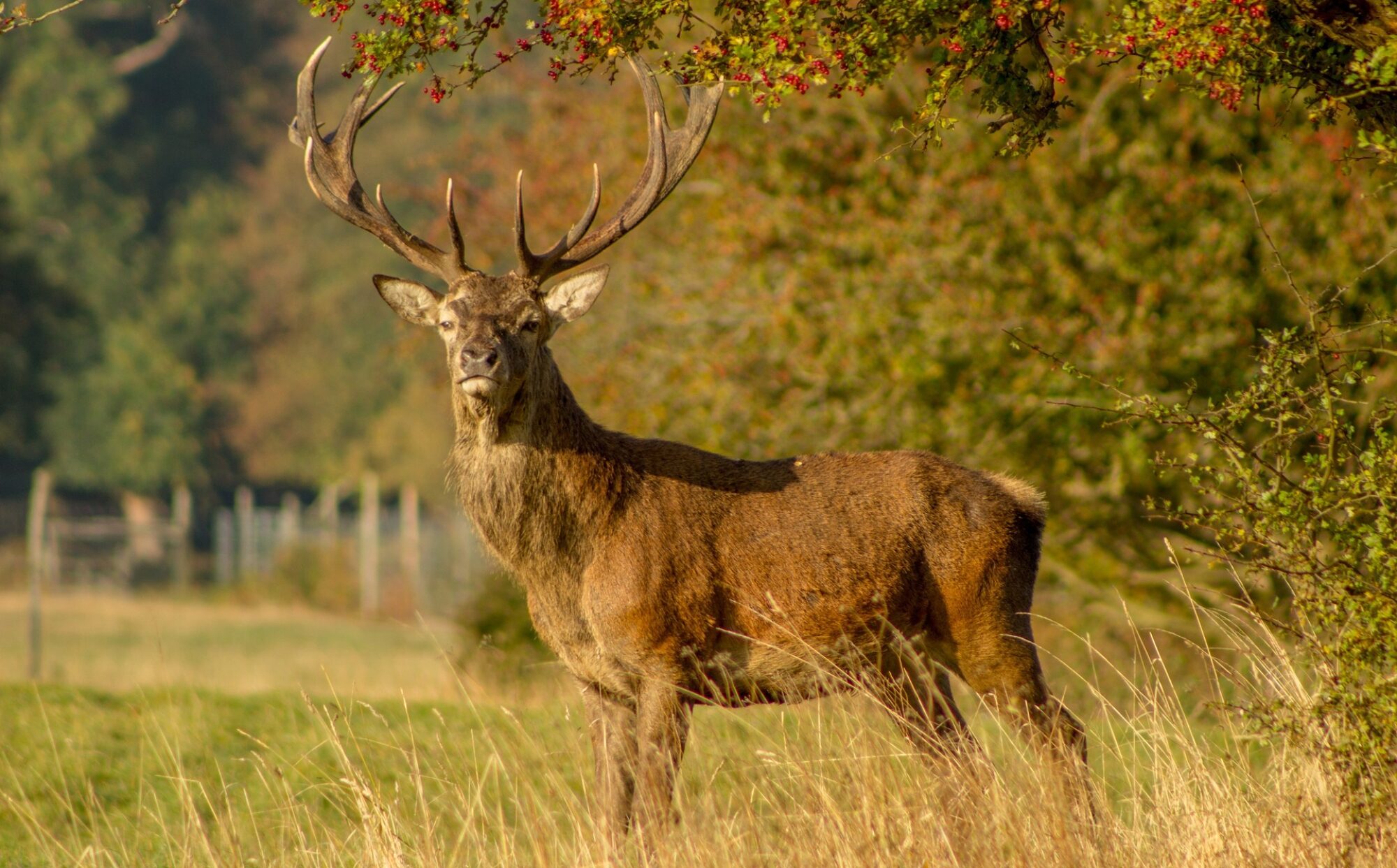
In 1974, Connecticut passed the Deer Management Act and, in 1975, held its first deer firearms hunting season, changing the status of white-tailed deer from agricultural nuisance to valuable game animal.
White-tailed deer are found over most of southern Canada and the United States (except for most of California, Utah, and Nevada) and south to Panama.
They are most frequently seen in agricultural and forested areas where the ground is covered with grass or other low-growing plants.
Connecticut offers the following seasons: Deer Bowhunting, Deer Lottery, Deer Shotgun/Revolver/Rifle, and Deer Muzzleloader.
In Connecticut, it is unlawful to hunt moose or bear but you can enjoy their sightings. This legislation raises the fines for illegal hunting of these creatures and requires the Department of Environmental Protection Department commissioner to suspend or revoke a hunter’s license if convicted. In addition, it empowers the commissioner to establish a legal open season on these animals as required by law.
- Black Bears
The state’s black bear population is estimated to be in the hundreds. The majority of the Black bears inhabit north-western Connecticut.
National and state parks are good places to spot black bears. Black bear habitat includes woodlands with deciduous and coniferous trees and brooks, swamps, and rock ledges. - Moose
In North America, there are four distinct moose subspecies. The eastern moose is a subspecies that has colonized Connecticut. Eastern moose can be found in the northeastern United States, and eastern Canada, including Newfoundland, and west to the Great Lakes. The current population is around 100 animals.
Moose dwell in forests. They consume buds, twigs, and leaves from many shrubs and trees, including maple, birch, and cherry. In addition, Moose may be found foraging for aquatic plants in wetlands throughout the spring and summer.
Small Game Hunting
- The red squirrel lives in upland hardwood forests and is occasionally observed in city parks and gardens. Daily limit (8); Season (40)
- Eastern cottontails prefer open fields, meadows, yards, and other grassy areas to live. Eastern cottontails require extensive shrubland or young forest with tight, intertwining vegetation. Daily limit (3); Season (25
- European Hare: Daily limit (1); Season (10)
- Snowshoe Hares enjoy the protection of dense thickets and underbrush, which are their primary food sources. Laurel trees, as well as cedar and spruce swamps, can also accommodate hares. Daily limit (2); Season (10)
- Woodchucks prefer open forest edges, meadows, farm pastures, brushy areas, fields, suburban yards/gardens, and utility corridors as habitats. Woodchucks are well-adapted to living in human-dominated settings such as residential communities with a mixture of woodlands. Daily and Season (no limit)
- Resident Game Bird
- Ring-necked pheasants are generally found in fertile croplands and cultivated grain fields interspersed with fallow weed lots, pastures, tiny marshes, and shallows. Daily (2); Season (10)
- Ruffed Grouse: Daily (1); Season (8)
- Quail: Daily (2); Season (10)
- Chukar and Hungarian Partridge: Daily (2); Season (10)
- Wild Turkey
- Furbearers
- Raccoon: Daily (5); Season (no limit)
- Opossum: Daily and Season (no limit)
- Red and Gray Foxes: Daily (3 combined); Season (30 combined)
- Coyotes can live in various environments, ranging from wooded communities to developed areas like city parks, beaches, and business parks. Daily and Season (no limit)
Legal Hunting Weapons
- Firearms Hunting
A person holding a firearm hunting license may only use rifles, shotguns, muzzleloaders, handguns, and high-velocity air guns as per the DEEP regulations.
- Rifles and Handguns
- State-owned land is off-limits to rifles or handguns using ammunition larger than .22 caliber rimfire. Additionally, permit-Required Hunting Areas do not allow Rifles or Handguns of any caliber.
- It is against the law to use rifles or handguns for hunting turkeys, waterfowl, or other federal migratory game birds except for crows.
- It is unlawful to hunt on private property with a caliber greater than.22 long rimfire rifle during the rifle deer season/private land shotgun unless the user has a valid private land deer season permit and permission from the landowner.
- Using rifles or revolvers to hunt deer is subject to additional limitations.
- At night, the use of ammunition greater than a.22 rimfire caliber to hunt raccoon or opossum is prohibited.
Note: It is legal to fire a .17 caliber rimfire rifle in all circumstances where it is permissible to use a.22 caliber rimfire rifle.
- Shotguns
- On state-owned and leased property and Permit-Required Hunting Areas, it is against the law to possess shotgun ammunition larger or heavier than #2 shot. It is also unlawful to do so on private lands during the Private Land Shotgun/Rifle Deer Season. However, up to and including size BB steel shot may be utilized by waterfowlers hunting from a boat, blind, or fixed location on any property.
- Hunting waterfowl, rails, and coot with lead shots are illegal.
- Using shotguns larger than 10-gauge for hunting waterfowl is not allowed. In addition, when hunting waterfowl, other migratory birds (except crows), deer on state lands, and turkey, shotguns must not be able to hold more than three shells (2 in the magazine, 1 in the chamber). However, because unplugged shotguns are permitted throughout the September Canada goose season, they are legal.
- Shotguns may only be used to hunt deer or turkey under certain conditions.
- Muzzleloaders
- A muzzleloader is defined as a rifle or shotgun of at least .45 caliber, containing no self-contained cartridge and capable of firing only powder and a single projectile placed independently at the muzzle end. Shotgun converters and telescopic sights are permitted.
- When hunting small game and waterfowl, rules for Smoothbore Muzzleloaders are the same as shotguns.
- On state-owned land, the same restrictions apply to muzzleloading rifles as to rifles: For hunting small game; however, a.36 caliber muzzleloading rifle using round ball ammunition only is allowed on state-owned land.
- A percussion/in-line muzzleloader having a cap or primer installed, an electronic muzzleloader with a battery attached, or a flintlock muzzleloader having powder in the pan are all considered loaded weapons.
- High-Velocity Air Guns
- Air guns are only legal if they utilize a single ball or pellet-like projectile. As with rifles and handguns, air gun use is restricted in the same way.
- Bowhunting
- Legal Bows and Arrows: Long, recurved, or compound bows with a draw weight of 40 pounds or greater, and crossbows are allowed for hunting deer and turkey under state law. Mechanical string release devices are legal. Any drug, poison, or tranquilizing substance on the arrow is against the rules.
- Crossbows: Crossbows may be used to hunt deer, turkey, and other animals. Crossbows with a draw weight of at least 125 pounds and a functional mechanical safety device on the permanently fixed rifle type stock are allowed. The arrow length must be a minimum of 18 inches when excluding the broadhead. When a crossbow is completely drawn with an arrow in place, it is considered loaded. Telescopic sights are permissible.
- Arrowheads: The minimum size for hunting arrowheads is 7/8 inch in width at its thickest point and must have at least two blades. Arrowheads that are crafted to open on impact are allowed as long as they fulfill the criteria mentioned above. It is unlawful to carry a gun while archery hunting.
Native Species
- The coat of the white-tailed deer is golden brown to tan and made up of tiny, thin hairs. They are graceful species with big ears, long legs, and little, pointed hooves. Adult male antlers are broad and branching. The tail is brown above and white below, which is the most apparent feature. Males’ average weight is 150 pounds, whereas females’ average weight is 110 pounds. The average length of an adult is about 71 inches. Males are generally larger than females.
- Gray squirrels weigh about 1-1.5 pounds with a 16-21 inches length. Gray squirrels eat a variety of hard fruit, including acorns, beechnuts, mushrooms, maple seeds, and some field crops such as corn. The Connecticut gray squirrel is the most common and largest of the squirrels in the state. Its fur is silvery gray on the back and sides, though its underparts are white.
- Cottontail rabbits have two species – New England Cottontail and Eastern cottontail. The Connecticut native rabbit is the New England Cottontail. The eastern cottontail came to New England in the late 1800s and early 1900s, and it has been spreading ever since. Both species of cottontail rabbit have a reddish-brown coat, stocky build, enormous hind feet, long ears, and a short fluffy tail that resembles a cotton ball. The New England cottontail is generally smaller and lighter than the eastern cottontail, weighing 1.6 to 2.9 pounds and measuring 14.2 to 18.8 inches on average. The eastern cottontail weighs between 1.8 and 2.9 pounds and has a length of 14.8 to 18 inches.
- Snowshoe Hare is a native species of Connecticut. The length of an adult snowshoe hare ranges from 18 to 20 inches, with a weight of 3 to 4 pounds. They possess strong hind legs, big feet, and elongated ears.
- Woodchuck is the largest member of the squirrel family in terms of size. This stocky mammal has short, powerful legs and long, curved claws on the front feet. The fur coat is light to dark brown. The woodchuck has a short, bushy, nearly flat tail and tiny, rounded ears. Males and females are virtually identical in appearance, although males are somewhat larger.
- Coyotes have wide, pointed ears, a long muzzle, yellow eyes, slim legs, and small feet. The fur is a grizzled-gray color with a cream-colored underside and a straight, bushy tail. The eastern coyote is significantly larger than its western counterpart. The average adult length from nose to tail is about 48 to 60 inches and weighs between 30 and 50 pounds, with males generally weighing more than females.
- Raccoon is one of the most easily recognized furbearers with long, thick fur gives and gray-brown color. The average weight of an adult raccoon is 10 to 20 pounds and a length of 23 to 38 inches, including the tail.
- The Opossum grows to be 16-20 inches long and weighs 4-12 pounds. It has lengthy, rough, grayish-white fur. Opossums have a pointed and slender muzzle, tiny ears, and short legs.
- Gray Fox’s weight ranges from 7 to 14 pounds and grows 32 to 45 inches. They have pointed ears, a long snout, and an elongated, bushy tail. Its fur coat is grizzled-gray. The tip and the upper portion of the tail are black.
- Red Fox is characterized by a bright red coat, black legs and ears, and a long, white-tipped bushy tail. Red foxes weigh around 7 and 15 pounds and measure between 39 and 43 inches long with the tail.
- Ruffed grouse, a native species of Connecticut, is a long-time resident of Connecticut’s landscape.
Public Lands
Connecticut is home to various public lands, from state parks and forests to wildlife management areas. These lands provide opportunities for outdoor recreation, wildlife viewing, and simply enjoying the beauty of Connecticut’s natural landscape.
The state parks system in Connecticut includes over 110 parks and 32 forests covering more than 1,50,000 acres. Several state-owned beaches, lakes, and ponds are open to the public for swimming, fishing, and other activities. Many of the state parks offer camping facilities as well. In addition to state parks, Connecticut has many other types of public lands. These include wildlife management areas managed by the state Department of Energy and Environmental Protection to conserve and manage wildlife populations. There are several federally-managed lands in the State, such as national forests and national wildlife refuges.
According to the DEEP, there are 97 Wildlife Management Areas in the State, totaling 32,000 acres of protected land.
WMAs promote biodiversity by preserving the habitats such as grasslands, old farms, and coastal salt and freshwater marshes for a wide range of mammals, birds, and waterfowl. They also offer public excursions such as hiking, wildlife viewing, and photography but are generally more focused on fishing, hunting, and trapping.
- The Nod Brook Wildlife Management Area is a 137-acre area of DEEP property along the Farmington River in Avon and Simsbury. The State purchased the Holloway Farm in 1975 with partial funding from the federal government to establish a permitted training and field trial area for hunting dogs as its primary goal. On most weekdays, Nod Brook is also frequently utilized by individual dog trainers, and live ammunition discharge is allowed.
Over the years, enhancements to the water bodies and upland habitat in the region have been made, benefiting wildlife species and increasing the area’s worth for a variety of extra outdoor activities by the general public. In addition, other compatible uses of the property, such as fishing, small game, and waterfowl hunting, trekking, nature viewing, and cartop kayak and canoe access to the Farmington River, have been promoted by the Department. The area contains a diverse range of habitats, including marshland and an extensive pond system. The area’s habitat improvements were primarily paid for by excise tax funds from sports enthusiasts and women under the Federal Aid in Wildlife Restoration Program.
Nod Brook WMA is open to hunting. Hunters must wear hunter orange apparel (hats and jackets) during the fall and winter hunting seasons and orange vests for their dogs.
- The Charles E. Wheeler Wildlife Management Area is a 625-acre nature preserve, brackish tidal marsh, and hunting ground in Devon, Milford, New Haven County, Connecticut, that is managed by the State of Connecticut. The Charles E. Wheeler WMA is located on the eastern Milford shore of the mouth of the Housatonic River, which is bordered by a barrier beach known as Milford Point.
The Housatonic River’s primary channel runs north and south to the west of the Charles E. Wheeler WMA. Still, much water flows into and through the estuary, particularly during high tide. Wetlands make up most of the WMA’s territory, both covered and exposed at high tide, and are primarily covered in vegetation. A low marsh smooth cordgrass and a high marsh salt meadow cordgrass are the significant fauna. The WMA is one of Long Island Sound’s most significant migratory bird stopover areas, especially for shorebirds, and is home to several endangered plants and animals. The WMA is a haven for ducks, geese, swans, and other migratory birds. In addition to insects, and crustaceans, there are also various species of fish and mammals.
The WMA is popular for hunting, fishing, bird watching, photography, and boating. Hunting of waterfowl only is permitted during the season with permits.
- Sessions Woods Wildlife Management Area is a state-owned nature reserve in
Burlington, Connecticut, with 771 acres. The preserve is maintained by the Connecticut Department of Energy and Environmental Protection. It focuses on conservation education while also containing the Sessions Woods Conservation Education Center with displays about local wildlife and a large meeting room. The WMAs provide educational programs, demonstrations, and workshops on wildlife and natural resource management. Outside, there are demonstration sites, self-led hiking trails, and artifacts. Permits are required for hunting with bows or in the waterfowl season. Only special permits are available for bow hunting and waterfowl hunting. Sessions Woods WMA’s wildlife habitat tracks offer a variety of experiences. For example, along the Beaver Pond Trail and Forest Meadow Trail, you may see demonstrations of animal behavior and habitat management techniques. Hiking trails open at sunrise and close at sunset. Bears are spotted frequently at this location and along the trails.
- Maxwell Belding bequeathed 282 acres of land in Vernon to the State of Connecticut, forming the Belding Wildlife Management Area. In 1981, a Memorandum of Understanding between the State and the Department of Energy and Environmental Protection was ratified by both parties. The document instructs authorities to use cutting-edge wildlife, forestry, and conservation methods to preserve and enhance the land. Shrublands and young forests support over 200 species, including birds, mammals, reptiles, and amphibians. Belding WMA has a wide range of habitat types, including fields, forests, and marshes. The grassy field reaches of this site are home to several species of migratory birds, including indigo bunting and blue-winged warblers. Black-throated green warblers and red-breasted nuthatches in the coniferous forest may be heard. The ground-dwelling ovenbirds and waterthrush sing from the river. Each spring, the woodcock will return to do their courtship display, and wood frogs congregate in vernal pools, where their song may be heard on the first warm day of spring. Along the Tankerhoosen River, a variety of birds migrate.
- Barn Island Wildlife Management Area (BIWMA) was established in 1944 and is located on the southeastern-most point of Connecticut, in the town of Stonington. Its 1013 acres in the State’s most extensive, most diverse, and environmentally significant coastal Wildlife Management Area. BIWMA aims to provide a healthy, undisturbed environment for both resident and migratory fish and wildlife. The site contains one of Connecticut’s last and most giant un-fragmented coastal forests and an outstanding marsh system. BWIWMA was established to provide habitat for migratory waterfowl and waterfowl hunting. Still, it has always been managed for several purposes, including regulated hunting, fishing, trapping, wildlife viewing, hiking, and horseback riding. It also includes organized outdoor education programs. Barn Island has been a pheasant reserve. The property consists of a network of trails, a boat ramp, and a parking lot at the south end of Palmer Neck Road. Hunting is still a major pastime at BIWMA, taking place during the following seasons:
- Spring Turkey, Small Game, Waterfowl
- Fall Archery – Deer and Turkey
- Fall Shotgun – Deer and Turkey
- Muzzleloader – Deer
- James V. Spignesi Jr. Wildlife Management Area is 524 acres exclusively for hunting access. The WMA was named after Jim Spignesi, a state conservation officer killed during a routine patrol by a hunter’s bullet near the present WMA in 1998. It is a managed field for pheasant hunting, and the Little River can be seen from a distance beyond the farms. During hunting seasons, make sure you wear orange hunter vests and hats.
Regulatory Agency
The Connecticut Department of Energy and Environmental Protection (DEEP) is a state agency of Connecticut headquartered in Hartford. The department is in charge of the state’s natural resources, environment and public utilities, and energy policy.
The Connecticut Department of Environmental Protection and the Connecticut Department of Public Utility Control were combined in July 2011 to form the new agency DEEP, established on July 1 of that year. Daniel Esty was named commissioner of the DEEP when it was formed in July 2011.
DEEP is responsible for managing the state’s energy and environmental resources. DEEP helps residents save energy, protect the environment, and strengthen the economy. Some of the services offered by DEEP include:
- Energy efficiency programs, including home weatherization and appliance rebates.
- Environmental protection, including air quality monitoring and management.
- Recycling and waste reduction programs.
- Habitat conservation and land management.
- Grants and technical assistance for renewable energy projects.
- Energy efficiency programs.
- Recycling and waste management services.
- Public transportation initiatives.
- Environmental protection and restoration program.
DEEP is responsible for protecting the environment and promoting sustainable energy initiatives in the state. The DEEP is also responsible for managing Connecticut’s natural resources, including forests, wetlands, and waterways. The department works with local municipalities and private landowners to protect these resources and encourages sustainable practices to benefit the environment and the economy.
The Connecticut Department of Energy and Environmental has three branches:
- The Energy Branch oversees the state’s energy policies and programs, including renewable energy, electric generation, and energy efficiency.
- The Environmental Quality Branch regulates Connecticut’s air quality, water resources, and waste management.
- The Environmental Conservation Branch protects the state’s natural resources, including forests, wetlands, and wildlife. It conducts scientific investigations and assessments to protect these resources and their habitats and ensure their wise and sustainable use.
Benefits of Coming to Hunt in Connecticut
There are many benefits to coming to hunt in Connecticut. The State has a rich history of hunting and offers ample opportunity to pursue a variety of game species. Hunters will enjoy plentiful populations of deer and turkey and a wide variety of small games. In addition, Connecticut offers excellent access to public land, making it easy to find a place to hunt. The State also has a well-developed network of hunting clubs and preserves, giving hunters plenty of options for pursuing their favorite game.
Here are a few reasons why you should consider hunting in Connecticut:
- There are many game species to choose from, including deer, turkey, and small game. Connecticut is home to some of the best deer hunting in the country. The State has a robust population of white-tailed deer, and hunters can find great hunting opportunities throughout the State. Hunting these animals can be a challenging and rewarding experience. Whether you are a seasoned hunter looking for a new challenge, or a first-timer eager to try your hand at the sport, you will find plenty of deer and other game to hunt in our neck of the woods.
- The landscape in Connecticut is varied and beautiful, providing plenty of great hunting opportunities. Connecticut’s scenery is some of New England’s most stunning, with its large open ground. The rolling hill, tall forests, and coastline are fantastic sights. The locals are friendly and welcoming.
- Connecticut has a long hunting tradition, and the locals are passionate about their hunting heritage. The State has a rich history of hunting, making it an enjoyable place to explore while you are out in the field.
- The regulations for hunting in this State are fair and easy to understand.
- There are plenty of places to stay, eat, and buy supplies near popular hunting areas.
- Connecticut offers some excellent hunting seasons, so you can hunt throughout the year, with something for everyone no matter what type of game they are interested in pursuing.
- There are many good-quality hunting lodges and outfitters to choose from.
- Hunting in Connecticut is a great way to get outdoors and enjoy nature. There are plenty of outdoor activities to enjoy in addition to hunting, such as hiking, camping, fishing, and kayaking. In addition, there are many golf courses accessible to the public and boating, fishing, and swimming possibilities.
- The WMAs benefit all types of game and non-game wildlife, while the nature preserves are managed primarily to protect endangered and threatened species. Nearly every game animal found in Connecticut can be hunted on a WMA or nature preserve.
So, if you are looking for a great hunting destination, consider Connecticut! You will not be disappointed.
Hunter’s Bottom Line
There is nothing quite like the thrill of the chase for the hunter. The heart pounds, the blood rushes, and every sense are on high alert. When finally sighted, the game appears ethereal, a ghostly form darting through the trees. But there is nothing more real than the challenge of bringing it down. Whether it is a big game or a small game, successful hunting requires skill, perseverance, and a little bit of luck. Even so, the rewards are well worth the effort. In addition to the sense of accomplishment that comes with a successful hunt, there is also the satisfaction of knowing that you provided food for yourself and your family.
In Connecticut, hunters have access to some of the best hunting in the country. With its mix of forests and open fields, the state provides plenty of opportunities for all types of hunters. In addition, Connecticut offers a wide variety of game species, including deer, turkey, and waterfowl.
Connecticut offers some of the best opportunities in the Northeast for these exciting pursuits. Seasons are long, bag limits are generous, and regulations are sensible. Best of all, Connecticut is blessed with an abundance of public land open to hunters.
The Connecticut Department of Energy and Environmental Protection (DEEP) is responsible for managing the state’s wildlife resources. DEEP offers a variety of programs and services to help hunters, including licensing and permitting, education and training, and information on hunting areas. The agency also publishes a free magazine called “Connecticut Hunting & Fishing,” packed with information about hunting in the state.
The DEEP also offers a variety of special hunting opportunities. These include archery-only deer hunts, muzzleloader-only deer hunts, and special youth deer hunts. There are also several WMAs open to turkey hunting, small game hunting, and trapping. In addition to the public land open to hunting, there are many private landowners who allow hunters access to their property. The best way to find out where hunting is permitted is to consult a good map of Connecticut.
For many people, it is not just a sport but a means of putting food on the table. There are dozens of different game types to hunt in Connecticut, from deer to small game and waterfowl.
Hunting is a great way to get outside and enjoy the natural beauty of Connecticut. It is also a great way to connect with nature and learn about the animals that live in the state. And, of course, it is a lot of fun! If you are interested in hunting in Connecticut, plenty of resources are available to help you get started.